Finding Holiness in Unexpected Places: What Halakhah Can Be in a Place Like This
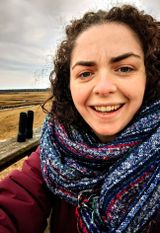
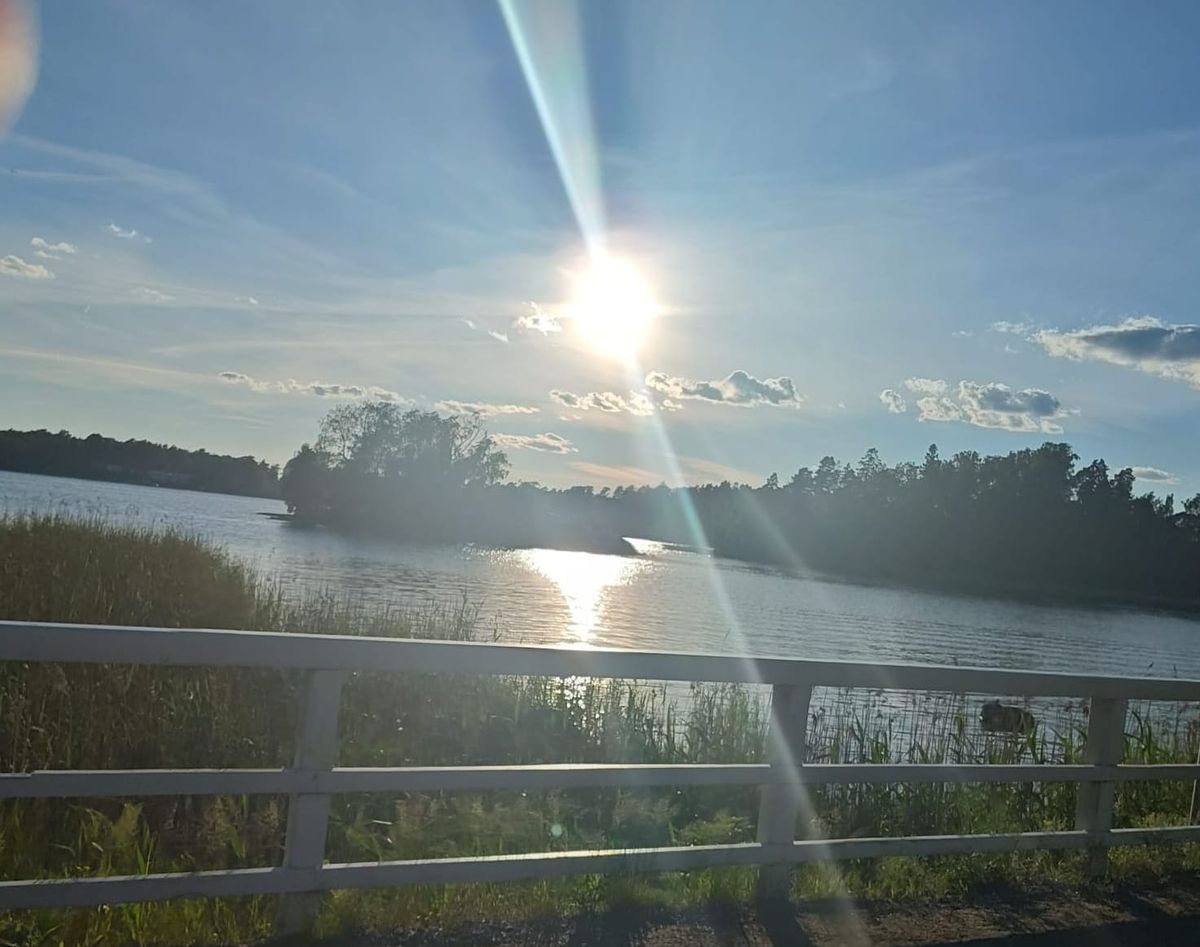
In 1886 in Aschaffenburg, Bavaria, Rav Simcha HaLevi Baumburger received a halakhic question from his son, regarding how to observe Shabbat during his upcoming travels to Norway. In his book of responsa entitled Zecher Simcha, Rav Baumburger responds:
“Regarding your question of how to go about observing Shabbat in the country of Norway where nowadays it is almost only day [i.e. almost 24 hours of sunlight]...In the Polar Lands (lit. פאלארלענדער) where there are six months of day and six months of night there is no established approach. …”
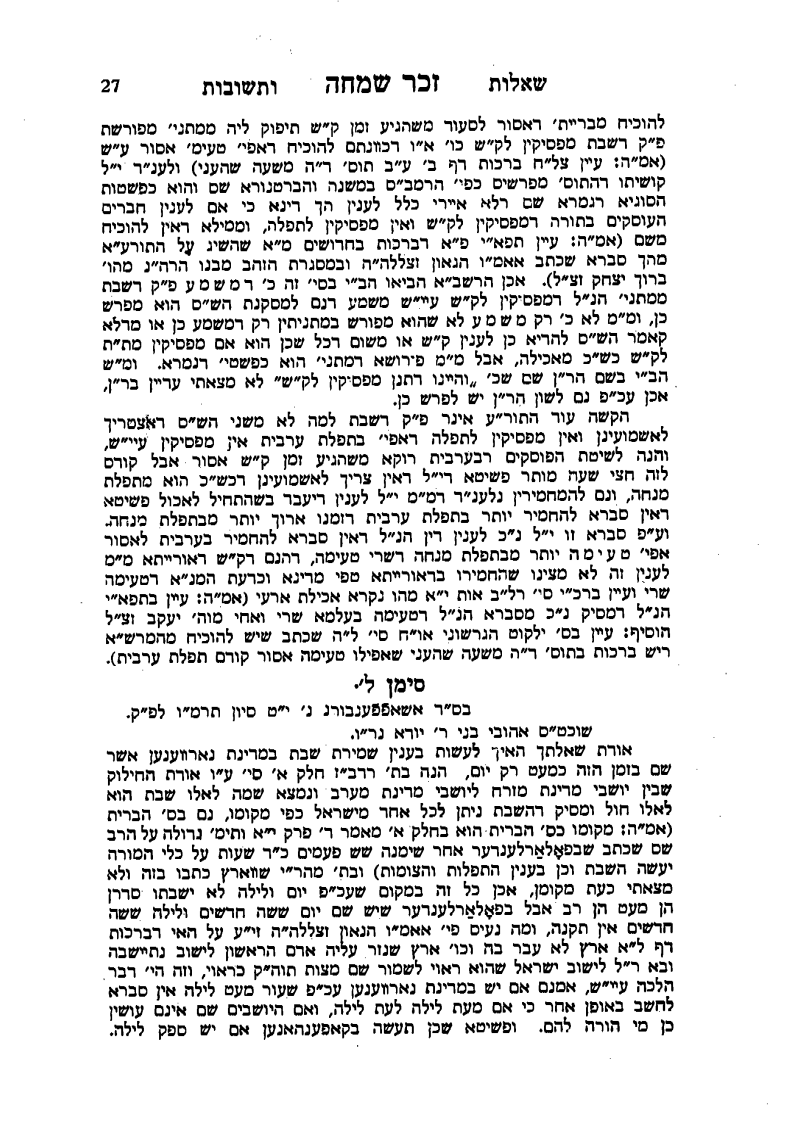
Rav Baumburger goes through possible approaches to his son’s quandary. He reflects on existent and established Jewish communities in Norway and Copenhagen and how they must determine some kind of night time.
But then he says:
“Indeed, all of this is the Halakhah [in principle]. However in practice, my opinion is that one should distance oneself from safek (Eng. doubt), even during the weekdays regarding the times of reciting the Shema and Tefillah, and in all regards to Shabbat one should not settle in this land in which there is doubt regarding what to do.” (Shu”t Zecher Simcha סימן ל)
Rav Baumburger concludes that one should only live in places in which it is possible to observe the Torah’s laws correctly or at least adequately. His ruling is that Norway and the Polar Lands in general, are not viable for a halakhic lifestyle.
When reading Rav Baumburger’s teshuvah for the first time a few months ago, I was taken aback. Rav Baumburger’s imperative to never live in these places felt out of touch with the vibrant Jewish life I have experienced here in Helsinki so far. Integral to his halakhic reasoning is the assumption that the Polar Lands are barren and empty of halakhic living. However in my own experience of the “Polar Lands” this past year, I noticed that although the Jewish community here in Helsinki may be only 800 members, the attendance in synagogue, passion for youth programming and women’s rosh chodesh circles, and translations of Jewish content into Finnish, do not suggest a place that is halakhically uninhabitable. Certainly, none of this suggests that it should be forbidden to live here. It may be different in comparison to the bustling Jewish life of Aschaffenburg or Frankfurt of the late nineteenth century that Rav Baumburger was familiar with. But Helsinki is certainly not a place of halakhic inadequacy.
To me, Rav Baumburger’s fundamental error is in his categorization of these lands as being places with the status of safek. Understood in halakhic literature as a status of doubt, safek here does not merely reflect being unsure of how to pray and calculate time when the Hebrew calendar is lunar. Rav Baumburger notes himself that these communities surely have technical halakhic solutions to such uncertainties. And they do – some halakhic stances coming from the contemporary Nordic rabbinic court, and others from rabbis and rabbinic courts who have spent time here or were sent letters from community members dating back generations. Nevertheless, Rav Baumburger does not take the halakhic authority of these smaller Jewish communities into account in his conclusion that “there is no established approach”. Even without existent precedent in these communities, the questions regarding halakhic time-telling and its ramifications on Jewish living are worth seeking clarity on – but not ones without possible answers. And yet, Rav Baumburger refuses to see the possibility of a halakhic lifestyle in this place he has deemed as full of unknowns. Built into his conclusion that these places have "uncertain" status is insight into Rav Baumburger's halakhic world – one where deeming something safek disqualifies it from interaction and participation on its own terms.
It seems that Rav Baumburger’s status of safek regarding halakhic time also reflects a broader Jewish existential uncertainty that comes from merely living in a place that is unfamiliar to Rav Baumburger’s own norms and assumptions. He states that Jews should only live where a halakhic lifestyle is possible, but what determines halakhic lifestyle? Here in Helsinki for over a century at least, we have had and still do have the ability to eat kosher food and observe Shabbat. We might not have a minyan of ten men for every service, but we do for Shabbat services, for burials, and for kaddish. It is a halakhic lifestyle, just not the halakhic lifestyle that Rav Baumburger is used to. It is a halakhic Judaism that does not have a built-in hechsher system; you cannot always see three stars emerging on a Saturday night; your etrog for Sukkot comes with the pitom already off in case it gets damaged in the long journey. But it is possible to live halakhically nonetheless.
Rav Baumburger’s assumed halakhic lifestyle may not be that different from many halakhically observant people’s approach today. Many assume halakhic Judaism is only possible in the Tristate Area, or only with kosher shops that charge triple the price of regular food, or only with paying hundreds of thousands of dollars to afford Jewish day school. Like Rav Baumburger, there are Jews today who impose halakhic expectations from one place onto others, and in doing so, are assuming superiority in practice and approach even if implicitly.
Rav Baumburger’s conception of Halakhah is one in which it is existentially fraught to practice in the Polar Lands. But what is the integrity of a halakhic system that is not practicable everywhere in God's world? A halakhic system that is limited? A halakhic system that does not always allow for Godliness to be invoked? Rav Baumburger’s approach to safek is a kind of halakhic defeatism; he understands safek as a reason to distance oneself as opposed to seizing the opportunity to discover holiness in unexpected places.
***
If I’m honest, not that long ago, I might have agreed with Rav Baumburger’s conclusion of safek status of the Polar Lands. The experience of coming to Helsinki after living in mainstream big Jewish communities in Toronto, Jerusalem and New York was and still is a massive culture shock.
In October 2023, I spent some time in the Berlin Jewish Community, as the beginning of a year-long journey to connect with my father’s German-Jewish roots. When attending synagogue there one Shabbat morning, I was surprised to find Jews of all kinds in one space – people with black hats, people on their phones, some people who were new members and others there for decades. In a North American context, most of these people would be siloed away from each other in different synagogues based on denominations, gentrification zones, liturgical tradition. This is the benefit of big Jewish communities where you can find your niche. But here, everyone was part of the same big Jewish family, which to an extent was also the only available choice to socialize Jewishly. For many of my European friends, these observations I had in Berlin were not particularly mindblowing or revelatory. But as a North American coming from a Modern Orthodox background, this was all incredibly new to me, and also quite refreshing.
This difference in experience of Jewish community and its ability to be “one-tent”, helped me resolve to be here, in Europe, after my semikhah studies were complete. And in comparison to Berlin, which at least has more than one synagogue, Helsinki only has one for the entire Jewish community in its vast range of observances, identities, and liturgical traditions. When I go to synagogue, everyone who is with me, really authentically wants to be there. Unlike in North America where it is possible to be so enmeshed in one’s Jewish community that one does not socialize outside of it, here where one has to integrate into Finnish culture due to our smaller numbers, there is zero external social pressure to be proudly Jewish. When one does show up Jewishly, it is with others who are totally passionate about their practice because they want to be there, not because they feel like they must. Even when there is communal conflict and strife here (as so many communities often have), it is clear that it comes from a passion and fervor that people here have for their Jewish community’s survival, and the deep conviction they have to ensure the flourishing of Finnish Jewish identity. In comparison to my time in New York — w here I interned at a synagogue that was one of five within a mile radius, each differentiated by issues such as mechitza height or whether women could serve as congregation president — the questions of Finnish Jewry have been much more salient and essential.
***
Living here in Helsinki has not only been a massive shift in my understanding of Jewish community, but also in my understanding of Halakhah.
This past Pesach in Helsinki was my first time ever doing the Passover seder without my family. Aside from the many ways in which I was far from home —regarding ritual, specific family practice, and the usual kosher for Pesach food — I was really struggling with not being able to say birkat ha’ilanot (Heb. “blessing of the trees”). This is the blessing said on the first blossoming of fruit trees during the days of the month of Nissan, which is also the month in which Pesach occurs.
The blessing of birkat ha’ilanot itself is gorgeous:
״בָּרוּךְ אַתָּה יהוה אֱלֹהֵינוּ מֶלֶךְ הָעוֹלָם שֶׁלֹּא חִיסֵּר בְּעוֹלָמוֹ כְּלוּם וּבָרָא בּוֹ בְּרִיּוֹת טוֹבוֹת וְאִילָנוֹת טוֹבוֹת לְהִתְנָאוֹת בָּהֶן בְּנֵי אָדָם״.
Blessed are You God Ruler of the Universe, who has withheld nothing from [the] world [created by You], and has created in it beautiful creatures and trees for human beings to enjoy.
The words of the blessing charge us; they are saying that we must take pleasure from God’s creations in this world. Notably, this blessing is recited on seeing the blossom of a fruit tree, and not on the fruit itself. It is a blessing on the process, and the pleasure of the thing itself – the beauty of the flower, not the sustenance or nourishment that the fruit would provide. It reminds us that the process of growing, and not just the final product, is integral.
Although not prescriptively necessary to be said in Nissan, birkat ha’ilanot is often homiletically used as a metaphor for the general feeling of the blossoming of geulah (Heb. “redemption”) that comes with our commemoration of Pesach on the 15th of Nissan, which is also known as Chag HaAviv or the Holiday of Spring.
And yet, here in Helsinki, I was not able to say it because our trees had not yet blossomed due to our colder climate.
Yet because of its association with metaphorical blossoming of geulah, I became so invested in determining how I could say this blessing even here. It almost felt like real redemption could not begin until glimpses of geulah could become visible all around us through the blossoms. With the seasonal delay from the ecological rhythms I am most used to, I felt deprived of perceiving geulah here in Helsinki. Would this mean my own experience of redemption would be delayed?
So I started looking for geulah elsewhere.
In Late March, I experienced my first Northern Lights spotting, only thirteen minutes away from my apartment. It was beautiful, transcendent, and made me feel connected to the universe. But was it redemptive? It might have been a glimmer of the Divine in my everyday living, but not the same as the blossoms I was eagerly waiting to see and bless.
I decided to look for alternative signs of the upcoming spring. I became fascinated with bird migrations, noticing how in March I began hearing birds again when I had not even realized they were totally mute all winter, as most birds cannot handle the cold of the Finnish climate and therefore, fly south.
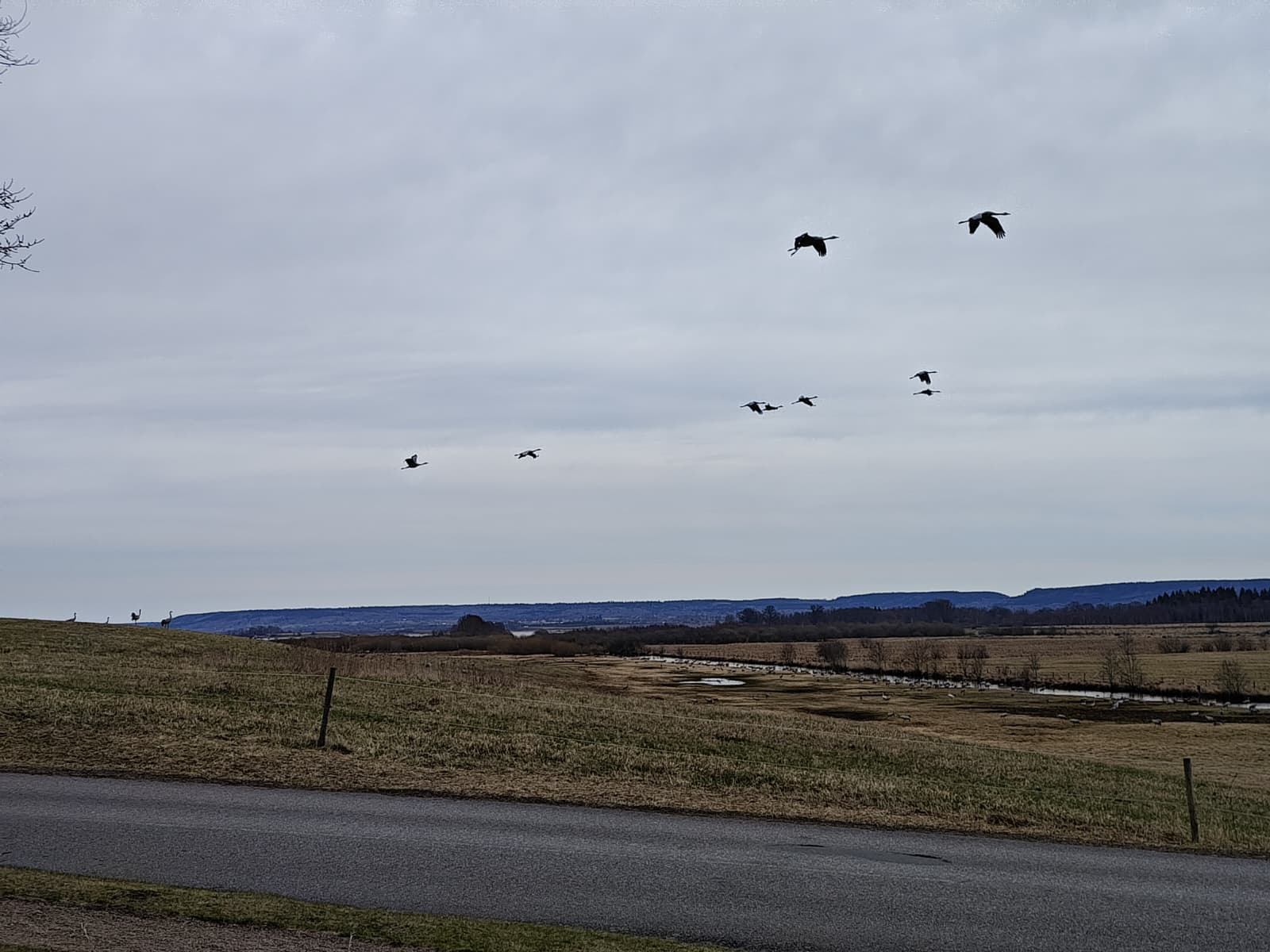
I then decided in Nissan to travel to Lake Hornborga in Sweden, where tens of thousands of cranes each year stop on their migratory flight from Spain to Norway. The cranes have been flying this route for 10,000 years, reconnecting each season with the same mate they separated from over the winter, staying paired for life to raise a family together. The way they find their partners amongst the thousands of other cranes is through a unique dance that each couple creates with each other. I deeply felt this sense that, regardless of where we are and what troubles we face, the crane migration goes on.
Marking the changing of the seasons with a crane migration — as viewed from their Lake Hornborga stopover located between warm winter in Spain and upcoming summer in Norway — definitely signified the coming of spring. And yet, it still was not the exact fit.
A few weeks later, I found a passage in the nineteenth-century halakhic work the Aruch haShulchan that reflected my exact reality:
"ובמדינתינו אינו בניסן אלא באייר או תחלת סיון, ואז אנו מברכין. (ערוך השולחן אורח חיים רכו:א)
And in our countries, we do not [bless] in Nissan, but rather in Iyar or the beginning of Sivan, and then we bless.” (Aruch HaShulchan OC 226:1)
Rav Yechiel Michel Epstein, the author of the Aruch HaShulchan, was a pulpit rabbi in the late 1800s in Russia. We share the same latitude and experience the same weather patterns. In reading his own halakhic reflections on birkat ha’ilanot, Rav Yechiel Michel Epstein reflected back to me what I myself was experiencing in the rhythm of the seasons here. I realized then that in my search for figuring out how to recite birkat ha’ilanot in Helsinki was not just to feel glimpses of geulah here. It was also to have an experience of halakhic practice that is shared with other halakhic practitioners all around the world. In reading Rav Yechiel Michel Epstein’s words, I suddenly felt less distant from my previous practice in North America, and more connected to the halakhic community writ large. I felt seen even amidst my incredibly particular and unique situation, and less isolated in my attempt to enact halakhic living here in my current environment.
And then, it finally happened. In early June, I walked around Töölölahti, a local lake near my apartment, and I finally saw the blossoms. On the 19th of Sivan (two days before my own Hebrew birthday), the glimpses of geulah finally came to Helsinki. And it felt so good for it to be the blossoms, even if Northern Lights or crane migrations technically convey similar sentiments.
Experiencing the Jewish calendar and the passage of time unique to the place I am has been an integral way to live Jewish life. Being here in Helsinki where Jewish life in some ways has felt more foreign than my previous practices, actually made me feel more connected and invested in my Jewish practice. Would I have thought about the meaning of this blessing as much as I had without experiencing it in this "atypical" way first? And to also find that there was previous rabbinic precedent for my experience, even being thousands of miles away from my home literally and figuratively, made me feel less alone in my experience of the world and the seasons around me.
Despite Rav Baumburger's opinion, or my own initial doubts, there was ultimately no safek in my practice. In a halakhic framework where safek means not yet having the answers instead of existential uncertainty, it was only a question of how to determine the answer as opposed to if I ever could. And trusting that it would unfold in front of me, led to some of the most profound spiritual experiences of redemption that I have had so far in my life.
The message of birkat ha’ilanot is also that one must take pleasure from the world. Which means that Halakhah is not a legal practice of suffering, of severing oneself from the world in asceticism. Being deeply in this world is worthy of blessing. Seeking out such blessing becomes a religious imperative to foray into halakhic uncharted territory, instead of an experience of halakhic vertigo that one should distance oneself from.
***
Figuring out when to say birkat ha’ilanot is one of the many experiences I have had here that have been an enrichment of my relationship to Halakhah rather than a hindrance to it. Ruling out living somewhere out of concern of Halakhah’s ability to be enacted there, is a ruling that does not believe in Halakhah’s potential to be present and coherent throughout all of God’s world. Rav Baumburger’s prohibition of living in the Polar Lands is one in which Halakhah is bound to certain places, instead of being a path to walk the world in and through.
Maybe this is what the rabbis meant in the Talmud when they said:
מִיּוֹם שֶׁחָרַב בֵּית הַמִּקְדָּשׁ אֵין לוֹ לְהַקָּדוֹשׁ בָּרוּךְ הוּא בְּעוֹלָמוֹ אֶלָּא אַרְבַּע אַמּוֹת שֶׁל הֲלָכָה בִּלְבַד (בבלי ברכות ח.)
Since the day the Temple was destroyed, the Holy One, Blessed be God, has only one place in the world, only the four cubits of Halakhah alone. (Babylonian Talmud Berakhot 8a)
Rav Baumburger’s outlook is one where Halakhah is limited. Even if not specifically limiting to the Temple, by prohibiting living in Polar Lands due to their location and situation, Rav Baumburger’s halakhic scope is one that is constricted and inhibited. However as this Talmudic passage indicates, in a post-Temple world, Halakhah is not bound to anything but its practitioners. Four cubits in rabbinic understanding is a phrase indicating one’s personal jurisdiction, with all kinds of different kinds of halakhic ramifications. Here, it means Halakhah is not more applicable in one location than another. Instead, it is invoked in the world through those who practice it – who live in Helsinki, Norway, Denmark and beyond. It is true that there will be a range of halakhic practices and approaches in different places that might differ from ones in larger Jewish communities. But this is in fact how many Jewish communities have navigated practice throughout history and across many lands. It is a healthier and more adaptable halakhic Judaism in the long run. Only accessing God through the Temple and through sacrifice would mean a Judaism that is not survivable in a world of Diaspora and of exile. Regardless of the difficulties of how we have gotten to this state, exile itself has democratized divine access. And has welcomed each person to invoke Halakhah in the world, regardless of what “world” is in front of them. We have questions about how best to map it out, but we have the resources and tools ourselves to navigate such uncharted territories. It is not an existence being in perpetual safek. All we have to do is believe and be empowered to believe that Godliness can be found all around, without any doubt even if not yet known.
Maybe like the cranes believing they will find their partners amidst the tens of thousands of crane dances, or believing that the blossoms will eventually appear, or that eventually, Shabbat does arrive in the Polar Lands.
Thank you to Lisa Shefer for professionally guiding me in the writing of this piece, and if you would like to work with her, she can be reached at: lcshefer@gmail.com. I am also thankful for my many other editors and offerers of insight who I am lucky to call my friends and family.
This is the first piece of hopefully many, laying out a project generously funded by the Bronfman Alumni Venture Fund called On the Derekh. You can read more about the project here.